Natural ways to support men's circulation: the Club House Wood guide
To support circulation naturally means using everyday food, movement, sleep and stress habits — and, if you choose, well-studied nutrients like L-citrulline and beetroot — to help your body keep blood flowing smoothly to every tissue. It is about consistency over extremes, and it works alongside, not instead of, the guidance of your doctor. This guide from Club House Wood walks through the highest-leverage habits, roughly in order of impact.
The highest-return habits for healthy circulation, in one place.
- Biggest levers
- Regular movement and a plant-forward, nitrate-rich diet matter most for everyday blood flow.
- Best foods
- Beetroot and leafy greens for nitrates, pomegranate and berries for polyphenols, oily fish for omega-3s.
- Move daily
- Even brisk walking prompts the vessel lining to release more nitric oxide.
- Don't forget
- Sleep, stress, not smoking and a healthy weight all shape circulation more than any pill.
- Where supplements fit
- Nutrients such as L-arginine, L-citrulline and beetroot can support the routine, but they are not a treatment.
If you have noticed that stamina and recovery take a little more effort than they once did, circulation is part of that picture. For most men the goal is simply steadier ground, and the levers with the most influence are the everyday ones.

What does it mean to support circulation naturally?
Supporting circulation naturally is the practice of using diet, activity, sleep and stress management to help your body do what it already does: move oxygen-rich blood efficiently to your muscles, brain and organs. It is not a cure; it is a set of small, repeatable choices that keep vessels flexible and blood flowing freely. Two ideas anchor everything below: consistency beats intensity, and these habits stack — each helps a little, and together they help a lot.
Why does circulation change for men over the years?
Blood is the delivery service for everything your tissues need. When the vessel lining is healthy and responsive, it releases nitric oxide readily, vessels dilate, and delivery is smooth. With age, that lining can become less responsive and the body's own nitric oxide production tends to taper — a change measured repeatedly in healthy adults (Seals et al., Clinical Science, 2011). Add a desk-bound day, uneven sleep, stress and dietary shortcuts, and the swings widen. The encouraging part is that each of those factors is something you can nudge in the other direction.
What are the most effective everyday habits?
1. Move your body most days
Movement is the single most reliable circulation habit. Working muscles demand more blood, which prompts the endothelium to release nitric oxide, and over time regular aerobic activity improves how responsively your vessels dilate (Green et al., Physiological Reviews, 2017). Walking, cycling, swimming and gardening all count; adding a little resistance training two or three times a week helps further. If you sit for work, stand and move for a few minutes every hour.
2. Build a plant-forward, nitrate-rich plate
What you eat feeds the pathway directly. Nitrate-rich vegetables give your body the raw material for nitric oxide — dietary nitrate is converted to nitrite and produces measurable vascular effects in humans (Webb et al., Hypertension, 2008) — polyphenol-rich fruits supply antioxidants, with pomegranate juice among the better-studied examples (Aviram et al., Clinical Nutrition, 2004), and healthy fats support the vessels themselves. Aim for half your plate vegetables, plenty of colour, and oily fish a couple of times a week.
| Food group | Examples | Why it helps circulation |
|---|---|---|
| Nitrate-rich vegetables | Beetroot, rocket, spinach, celery | Feed the dietary-nitrate route to nitric oxide. |
| Polyphenol fruits | Pomegranate, berries, dark grapes | Antioxidants studied for general vascular wellness. |
| Omega-3 fish | Salmon, mackerel, sardines | Healthy fats that support the vessels and heart. |
| Nuts & seeds | Walnuts, almonds, pumpkin seeds | Natural sources of arginine and healthy fats. |
| Whole grains & legumes | Oats, beans, lentils | Fibre for overall cardiovascular wellness. |
See how Club House Wood fits your routine →
3. Protect your sleep and manage stress
Sleep and stress are the quiet influencers. Short nights and chronic stress raise hormones that tighten vessels and work against smooth blood flow. Seven to nine hours of regular sleep, plus simple decompression — a walk, slow breathing, time outdoors — supports steadier circulation in ways no supplement can replace.
4. Mind the obvious risk factors
Not smoking, keeping alcohol moderate and working toward a healthy weight are among the most powerful things any man can do for his blood vessels. They are not glamorous, but they move the needle more than any single food or pill.
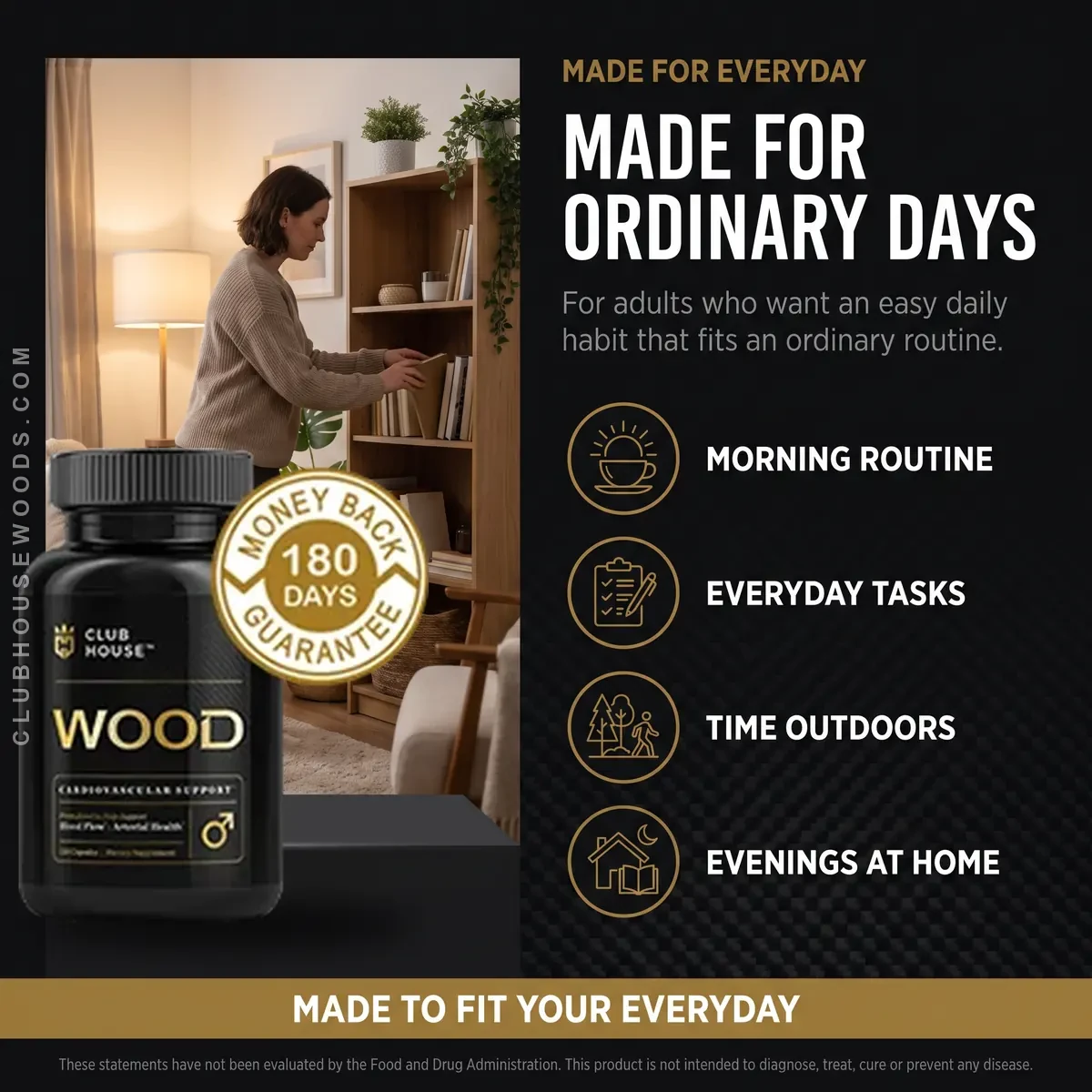
Which habits work fastest? An at-a-glance table
A “fast” habit is one you can feel the same day; a “slow” habit reshapes your baseline over weeks. Both matter. This table sorts the core habits by how quickly they help and how much effort they ask.
| Habit | Typical time to notice | Everyday effort |
|---|---|---|
| Brisk walk after sitting | Same day | Low |
| Nitrate-rich vegetables at a meal | Same day | Low |
| Swap a sugary drink for water | Days | Low |
| Plant-forward, oily-fish meals | Days to weeks | Medium |
| Regular sleep & stress routine | Weeks | Medium |
| Consistent exercise & healthy weight | Weeks to months | Higher |
Where do supplements fit in?
Supplements are a supplement to the habits above, not a substitute, and never a treatment for any condition. Still, a few nutrients are consistently part of the circulation conversation. Club House Wood brings several together: L-arginine and L-citrulline for the nitric oxide pathway, beetroot for dietary nitrates, and pomegranate, horse chestnut, horny goat weed and vitamin K2 for broader support — as four daily capsules. To understand the biology, read our guide to nitric oxide and blood flow and our comparison of L-citrulline versus L-arginine.
Make it a daily habit
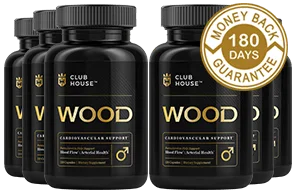
Club House Wood is a once-daily, four-capsule formula that supports the nitric oxide pathway with L-arginine, L-citrulline and beetroot. The six-bottle bundle is the best value at $49 per bottle, with free U.S. shipping and a 180-day guarantee.
Order Club House Wood — from $49/bottleHow do you build a simple daily routine?
The best routine is the one you will keep. Rather than overhauling everything at once, stack one small habit at a time until each feels automatic:
- Walk every day, and break up long sitting with a few minutes of movement each hour.
- Add a nitrate-rich vegetable to at least one meal — beetroot or leafy greens.
- Eat oily fish a couple of times a week for omega-3 fats.
- Protect a consistent bedtime so sleep does the quiet work.
- Take any supplement at the same time daily — for Club House Wood, four capsules with water.
When should you talk to a doctor?
Natural habits are for supporting circulation already within a normal range; they are not a replacement for medical care. Speak with your doctor if you take blood-pressure medication, nitrates or blood thinners, have a diagnosed condition, are under 18, are preparing for surgery, or notice symptoms such as chest discomfort, leg pain when walking, swelling or numbness. A quick conversation ensures anything you add fits safely with your care.
Frequently asked questions
What does it mean to support circulation naturally?
It means using everyday food, movement, sleep and stress habits, and optionally well-studied nutrients, to help your body keep blood flowing smoothly to your tissues. It complements, rather than replaces, medical care, and is aimed at circulation already within a normal range.
Which foods are best for healthy blood flow?
Nitrate-rich vegetables such as beetroot and leafy greens, polyphenol-rich fruits like pomegranate and berries, oily fish for omega-3 fats, and nuts and seeds for arginine all support the pathway. A varied, colourful, plant-forward plate is the foundation.
Does exercise really improve circulation?
Yes. Regular aerobic movement prompts the vessel lining to release more nitric oxide and, over time, improves how responsively vessels dilate. Even brisk daily walking counts, and adding some resistance training helps further.
How long does it take to support circulation?
A nitrate-rich meal or a brisk walk can nudge blood flow the same day, while broader gains from consistent diet, exercise, sleep and supplement habits usually build over several weeks to a few months. Individual results vary.
Where do supplements like Club House Wood fit in?
Supplements are a convenient top-up to good habits, not a substitute and not a treatment. Club House Wood supplies L-arginine, L-citrulline, beetroot, pomegranate, horse chestnut, horny goat weed and vitamin K2 in four daily capsules to support the pathway consistently.
When should a man see a doctor about circulation?
Speak with a doctor if you take blood-pressure medication, nitrates or blood thinners, have a diagnosed condition, are under 18, are preparing for surgery, or notice symptoms such as chest discomfort, leg pain when walking, swelling or numbness. Natural habits are not a substitute for medical care.
Try Club House Wood risk-free for 180 days →
Club House Wood is a dietary supplement, not a treatment for any medical condition. These statements have not been evaluated by the Food and Drug Administration. This product is not intended to diagnose, treat, cure or prevent any disease. Always consult a qualified healthcare professional about your individual needs.
References & further reading
- National Center for Complementary and Integrative Health (NCCIH). Heart health and complementary approaches. nccih.nih.gov
- Examine.com. Nitrate (including beetroot). examine.com/supplements/nitrate
- Examine.com. Citrulline. examine.com/supplements/citrulline
- National Institutes of Health, Office of Dietary Supplements. Omega-3 Fatty Acids. ods.od.nih.gov/factsheets/Omega3FattyAcids-HealthProfessional
- Green DJ, et al. Vascular adaptation to exercise in humans: role of hemodynamic stimuli. Physiol Rev. 2017. PMID 28151424
- Seals DR, Jablonski KL, Donato AJ. Aging and vascular endothelial function in humans. Clin Sci (Lond). 2011. PMID 21244363
- Webb AJ, et al. Acute blood pressure lowering, vasoprotective, and antiplatelet properties of dietary nitrate via bioconversion to nitrite. Hypertension. 2008. PMID 18250365
- Aviram M, et al. Pomegranate juice consumption for 3 years by patients with carotid artery stenosis reduces common carotid intima-media thickness, blood pressure and LDL oxidation. Clin Nutr. 2004. PMID 15158307
These references describe the habits and ingredients in general terms and do not constitute evidence that any product treats, cures or prevents any condition.
Keep reading: nitric oxide and blood flow · L-citrulline vs L-arginine · back to the Club House Wood blog · homepage.